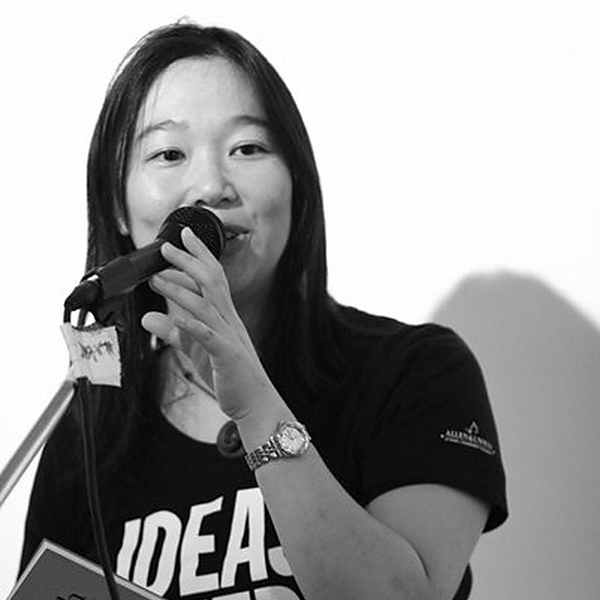
Chats with a human: Matt Finch, researcher and practitioner

Matt Finch is a researcher and practitioner in the fields of foresight, strategy, mediation, and negotiation. He currently leads the project “Death, dying, and the afterlife in the age of AI” at the University of Oxford.
He has been on this career path ever since he started reading, writing, speaking, and listening...and questioning what was going on around him. Professionally, he has zigged zagged through many different jobs – having been a historian, teacher, travel writer, and consultant, among other things.
What is your understanding of AI and what it does?
Because of my job, I have to work with ideas of what AI may become, as well as what it currently is and does. We look beyond what is currently hoped, feared, and expected and help people to ask: What else might happen?
The computer scientist Kerstin Dautenhahn has written that our ideas of what a robot was twenty years ago are basically outdated, and even a voice-activated smart speaker in your home is a kind of robot today; and that she wouldn’t even dare predict what we might call robot a half-century from now. When it comes to technologies of all kinds, our understandings and labels are ever-evolving.
I suppose currently, I see AI being used as a label for a bunch of technologies, capabilities, and systems which do things we have traditionally associated with humans – like making decisions, understanding language, and recognising patterns. So, interestingly, are we defining AI with reference to things we used to think machines couldn’t do?
In a strange way, just as the word “digital” now sometimes seems redundant because so many things are digital, we may end up in a future where there is no AI, because what we labelled as AI in the 2020s has simply dissolved into the taken-for-granted everyday.
There’s also the possibility that the way we understand and use AI today might be judged harshly in hindsight. Depending on the turns that the future takes, people of tomorrow may look back on our early use of Large Language Models in the same way we look back on medical discoveries like thalidomide and DDT: Oh, these people thought they were onto something wondrous, but they didn’t see the harms they were causing until too late! What fools! In such a future, there may still be AI, but they will differ in their form and use from what we have and do today.
The “AI” label also has some complicated fingerprints on its history. We could go back 75 years to the era of Turing, or even further to Aristotle imagining autonomous tools – but when it comes to the phrase “artificial intelligence”, John McCarthy, who was prominent at the academic meeting where researchers adopted the term, later said it was chosen in part out of disciplinary politics. They wanted to avoid getting caught up with Norbert Wiener’s theory of “cybernetics”, which meant the science of communication and control in living creatures, machines, and complex systems.
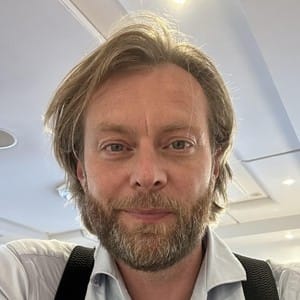
Photo by Matt Finch
As a millennial who has lived through many technological evolutions – first the internet, then social media, how has this influenced the way you view AI?
It’s funny how quickly you get used to the world of web browsers, or smartphones and apps, or wearables, or “don’t read the comments”, or widespread CCTV surveillance…the shock of the new seems to fade, for good or ill. I guess it was similar for the generations who saw the rise of cinema, sound recording, television, the locomotive or the automobile, the telegraph and telephone, air conditioning, vacuum cleaners, refrigeration, antibiotics, vaccinations, and so on. Bear in mind that those technologies and their attendant opportunities and risks, have never been distributed evenly.
I was mad for books and movies like Blade Runner, Neuromancer, and Robocop when I was about ten years old. Somehow I got it into my head that I was going to study cybernetics at Oxford University – thinking of this as the study of bionic limbs and androids and such, and thinking Oxford was a fancy place to study.
Instead I went off to do a bunch of other things, and eventually Oxford ended up asking me to work for them – and I discovered that cybernetics really means theorising about communication and control systems.
That’s actually not a world away from what I do now, which is taking a systemic view of strategy and negotiation! Wiener, who originated the theory, was concerned about “the human use of human beings”, and the dangerous potential for technology to control rather than enhance humans and their abilities.
Another thing: in Douglas Coupland’s novel Microserfs, from 1993, there’s a scene at a Christmas party where someone bemoans the children sitting zombie-like in front of SEGA videogames – but then a programmer says, “In fifty years’ time, these kids will be sitting at the switches of our life-support systems playing a game to biofeedback our failing EKGs.”
I think of that sometimes. And also how sunny and optimistic Coupland’s very moving novel was about Silicon Valley. I wonder what those characters would think about that place and industry today.
Has AI impacted your industry and/or adjacent industries and how?
Some people in strategy, foresight, and negotiation are using AI tools, mostly LLMs, in different ways – for research, to create documents, and to suggest strategic options or negotiating gambits.
Do you use AI at work? In what capacity?
For me and my colleagues, taking an ethics perspective, it tends to be more about looking at AI as a research object rather than using it as a tool – trying to see what it will and won’t do, but also thinking beyond the current assumptions and capabilities, figuring out what is being framed out of consideration when it comes to this emerging technology that is already becoming so prevalent.
That might mean interacting with an AI system directly, or watching what others do with it, or reading about what others are doing with it, and the impacts.
If you had the ability to change one thing about the way AI is being used now in your industry, what would it be?
I think I’d just reissue the usual caveat of not outsourcing your thinking. Rafael Ramírez and Trudi Lang helpfully write about “AI-in-the-loop” rather than “human-in-the-loop”; instead of the human acting as a custodian who must check the AI’s thinking, the AI is brought in as a kind of sparring partner, reacting to what you have come up with.
There is a danger sometimes when you can’t see how an AI system got to a particular position or statement. If there was one room in the sausage factory which the food inspectors couldn’t look inside, then no matter how delicious or nutritious the sausages seemed when they emerged, they probably wouldn’t pass inspection!
Processes like the publicly available Galway Questions, which came out of my fellowship at the University there, create an easily accessible framework within which people can think through their situation and what might transpire. As they do this, they can take responsible decisions about when to employ AI support and how to validate the process and its outputs.
How do you see AI transforming your industry in the next 5 years?
I’m no soothsayer, I tend to wonder what else could happen beyond that which is anticipated.
Yet I think we can say this:
People, communities, and institutions will continue to figure out the extent to which they are comfortable using the AI technologies of their day in higher-level decisionmaking.
This was never just about evolving technical capabilities, but also social, economic, political, and cultural factors. Societies decide or dispute what is acceptable, fair, and equitable in terms of harms and benefits; and these decisions, disputes, and the underlying values, can change over time. One question is who will have the power – political or otherwise - to make and enforce decisions about AI use. We’ve been talking about this a bit over at the Burning Platforms podcast.
It’s pretty much impossible to read the news or consume any media lately without being hit by headlines about how AI will end humanity in the next decade. The most recent prediction is by the end of this decade (tick tock). What’s your view of these headlines?
Time is a weird and wonderful thing. The future is a time different from the present which hasn’t arrived yet; in some senses, it’s just an aspect of the way we understand the here-and-now. You can’t gather data or evidence from things which haven’t happened yet, and no-one has privileged access to future events. So it’s always worth considering who is making predictions, and on what basis, and to what ends. Carissa Véliz writes on this in her book Prophecy.
It’s not just a problem relating to AI, either; consider the ways in which we do or do not attend to the climate crisis and its projected timeframes. A few years ago, there was a BBC article entitled “Remember when we had 12 years to save the planet?” Jose María Valenzuela and Javier Lezaun have written interestingly about the ways in which goals like “Net Zero by 2050” trigger debates and convene groups who hold conflicting opinions about the future.
I encourage people to consider not just, “What do we think is likely?”, or “What future do we want?”, but also: “How will what we’re doing today be remembered and judged, depending on how the future plays out?”
If we look at ourselves from the point of view of hindsight, imagining different futures, it can help us better understand the situation we’re in today – and the wisdom of the choices we are making. The “Galway Questions” process which I mentioned earlier is a simple, accessible tool which can help with this.
What does it mean for you to be human?
Blimey, just a small question then!
I suppose there’s a relationship I feel to other people which is somewhat distinct from the feelings I have towards horses, dogs, birds, mosquitoes, other animals,plants, plankton, microbes, the land, the sky, this and other planets, stars, the universe, atoms, neutrons, cartoon characters and other fictional beings, books, paintings, food, the smell of hay, gods and monsters, the golden ratio, concepts like liberty or ubuntu, the French national anthem, a recording of Aretha singing “Runnin’ Out of Fools”, cars, robots, undersea cables, hammers, chimneys, etc. In part that’s because of my upbringing in a European culture, in part because of my own inclinations, in part because of what I’ve read and learned and absorbed.
And within that broad matrix of relationships, there are of course all the various modes and bonds of friendship, love, allegiance, care, identity, kinship, collegiality, rivalry, enmity, etc that humans play out between one another.
Could something else, like AI, tune into that exact same frequency of relationship one day? Who knows, that’s one of the things my team are here to explore. Steven Shaviro has an interesting book called Discognition, using sci-fi to think through the ways in which nonhuman entities like tools are active in their own right.
Maybe new ways of relating are yet to emerge, and some of them, even coming from within already-existing human relations, might challenge current conceptions of what it means to be human.
Interestingly, in Solvej Balle’s book series On the Calculation of Volume, which I wrote about here, a group of people trapped in a Groundhog Day-type time loop start to wonder, after many repetitions, if they are even really human any more.
Do you think it’s possible to integrate AI into human lives and society responsibly? If so, how? If not, what do you think we should do about it?
One can always take – or assign - responsibility for integrating a new technology. The late Claudio Ciborra wrote brilliantly about introducing new technologies as a kind of hospitality. The question is who will take responsibility, how will they be held to account -- and by what authority and according to what values would such integration happen.
The British politician Tony Benn famously posed five questions which might be useful here:
· What power have you got?
· Where did you get it from?
· In whose interests do you exercise it?
· To whom are you accountable?
· How do we get rid of you?
In the age of AI, one might want to consider carefully to whom these questions need to be directed – and what kinds of safeguards might need to be in place.
All content is copyright © Karen Tay. Unauthorised reproduction, scraping, or use of this content, including by AI training systems, is prohibited without express written permission from Karen Tay.