Chats with a human: Miranda Palmer, youth development lead
I feel very cautious about AI and currently refuse to use it myself because I really dislike reading AI content. I think it’s obvious when someone has used AI, unless they’ve edited it substantially.

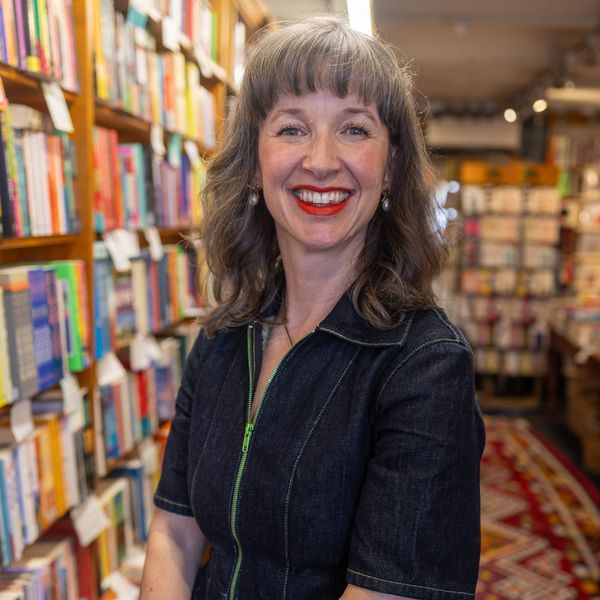
Miranda Palmer works in youth development for a foster care provider. She has been in the industry for over 20 years, starting as a nanny and babysitter. Miranda has a Bachelor of Human Services, and a Masters in Social and Community Leadership, as well as post-graduate qualifications in Professional Supervision from the University of Auckland. In her spare time, she gardens, reads and volunteers in animal rescue.
What is your understanding of AI and what it does?
AI takes information from around the internet and is programmed to format it to meet the request being given. I think it uses quite a lot of computing power, and I understand it’s still growing and being developed and absolutely not a perfect piece of technology.
How do you feel about this technology and why?
I feel very cautious about AI and currently refuse to use it myself because I really dislike reading AI content. I think it’s obvious when someone has used AI, unless they’ve edited it substantially.
I also worry that AI will impact how students learn and perform in terms of writing and expression. Why? Because I respect authenticity in all its forms - when we're writing, communicating, and in self-expression, including spelling mistakes, run-on sentences and all.
I’m currently pregnant and it’s alarming seeing the number of AI infographics that pop up on social media around pregnancy, with very slick diagrams and perfectly spelled explanations…all of them incorrect, of course. In my working life, I come across people who see these images and think they’re true all the time – because it presents as authoritative, and that really worries me. Misinformation can cause an untold amount of damage, and people don’t know until it happens.
Has AI impacted your industry and/or adjacent industries? How?
At my work, I see people using AI to create templates or to assist in the structure of report writing and other administrative tasks. Their work is seen by leadership teams and sometimes the public. I suspect that some people are using it for more than admin as well, and that worries me – because where’s the boundary?
Many of the people who come into contact with social services are those who have low literacy across key areas that impact them daily: health, emotional regulation, conflict management, employment needs, parenting (the list goes on). These are deficits inherited from cycles of neglect and abuse. Then you get on top of this a thick layer of social stigma caused by the impacts of colonisation, classism and unaddressed needs like learning difficulties.
Social media is an all-consuming part of many of these people’s lives. Some of the evidence used to have their children uplifted comes from social media platforms! And then if you look at the next generation – the tamariki and rangatahi who are born into the digital age, you can see the cycles repeat intergenerationally. The impact easy social media access combined with the risks of AI on kids who are already struggling with trauma and low emotional regulation skills cannot be overstated.
Deepfakes are something that really concerns me, especially in a role where I have contact with children and young people with high needs. There is no such thing as responsible social media, it’s been designed to be addictive and encourage scrolling and engagement – and with how online many of these whanau are, it can be difficult keeping someone focused on their real life, as opposed to their digital life. Working to get your life back on track is hard. Watching AI videos on social media is not…so when your entire life has already been hard, which do you think is more appealing?
Do you use AI at work? In what capacity?
I do not, even though we’re encouraged to use it as a tool. Maybe it comes across as a bit snobby and precious, but I prefer to do without it.
I’ve mentioned authenticity before, and sometimes authenticity can come from something that is not perfectly expressed. I am a words & languages person and learner. I think effective and respectful self-expression: listening, empathy, learning and compromise are key tenets to growth in everyone. I don’t feel convinced that AI helps with that. I have seen how it can summarise talking points and help make things clearer so I will concede that there are areas where it can help. I’m just not there [in terms of using it] myself yet.
You co-run an animal rescue in Auckland as well as working in youth development. Do you think jobs like these need to retain a high level of human judgment or be led by human values? Why?
I love this topic. I treat animal rescue and welfare like an (unpaid) job. I have ethics, standards and procedures to enable best practice. However, the animal welfare industry is unregulated and that pisses me off. Choosing which creature to save, when to intervene and how to help for us is definitely influenced by ethics and standards, however a big part of it is left up to the individual person or rescue.
Approaching a new rescue site is like being a social worker – you end up with the entire family history when people discuss how they ended up with 24 cats and nine dogs. You can see that in these situations, while you can have empathy, applying 100% emotional responses and reactions to their story is ineffective, unethical and often not a good use of resources. Which is the same dilemma we have for social services. At the end of the day, health and safety to ensure no harm and danger is taking place to vulnerable animals is the priority.
Balancing both pragmatism and empathy is a human task. I’m not convinced an AI system can help, beyond maybe creating a helpful informative flow chart. In tricky and high trigger issues like compassionate euthanasia and desexing – including spay-aborts to help with population control (a cat can go into heat from 5 months and have three litters a year – just one cat), we’ve had to combine both standards and procedures with human judgment for those areas where you need flexibility. Not everyone loves to hear about it, but that’s the reality for those of us doing the work.
There is a possibility that AI may be used to replace roles like early childhood teachers and nurse. How do you feel about this?
Honestly? My first reaction is absolutely not. I think these are uniquely human facing roles. I understand the use of tele or e-health and using AI to create resources but this is a step too far for me.
As a millennial who has lived through many technological evolutions – first the internet, then social media, how do you view AI?
Mostly negative with a few positives. I complimented someone on a reference letter they provided me recently and the author revealed they used AI but then also that they edited it heavily to humanise it – so I can definitely see the benefit. I feel I need to state some positives as well so as not to come across as completely anti-AI, because I’m not.
I’ve seen online AI used to formulate responses to conflict between people arguing and saw how it refined and stated emotions to make them digestible and understandable. However, I’m not sure I want someone to rely on AI to communicate in times of conflict. It feels like you’re trying to remove human emotion from the equation, when the nature of conflict itself is human.
What does it mean for you to be human?
It’s about connection.
If you had the ability to change one thing about the way AI is being used now in your industry, what would it be?
I do like that it can provide structure for a report or important document and I can see how a professional platform featuring AI would be handy….as long as it stopped there.
In terms of my industry, I suppose AI could be used to pick up social media users who appear to be losing emotional regulation. That would be interesting for those supporting people working towards court-mandated goals. Not in a punitive way, but I guess to confront online behaviour that professionals may not otherwise see and bring it into therapies and interventions.
How do you see AI transforming your industry in the next 5 years?
My organisation directly? Not a huge amount. The vulnerable public my industry serves…I see more misinformation and abuse of AI by using it to hurt and harm and perpetuate damage.
What are some changes, quiet or radical, that you’ve seen over the years in your industry?
Despite this being an under-funded industry, in general social services is finally grasping that we live in a bicultural country, and that this is an advantage when it comes to the knowledge we have to draw from. We’re now much more focused on whanau reunification, identity building and connection – this is ultimately what helps tamariki and rangatahi who have experienced trauma feel healed and fulfilled.
Also, and I hope this isn’t taken the wrong way, but our population demographics are changing. This is a good thing, as we see younger generations coming of age and starting to make an impact on the way ‘things have always been done’. It gives me hope for perhaps a different, more compassionate future.
Any last words?
I would rather have someone make me a badly-drawn card with a meaningful rambling message inside, than pay for something AI printed on a shirt, mug or notebook.
‘Chats with a human’ is an original series of content created for the Essentially Human website. I regularly interview someone from a different industry and ask them how AI has impacted their work.
All content is copyright © Karen Tay. Unauthorised reproduction, scraping, or use of this content, including by AI training systems, is prohibited without express written permission from Karen Tay.