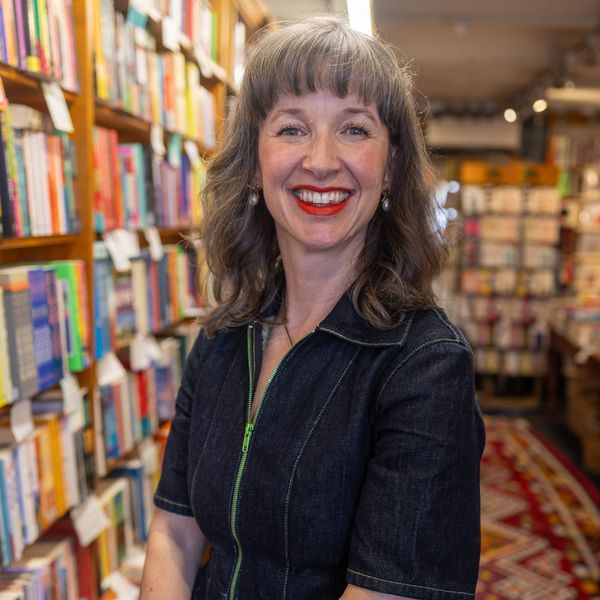
Chats with a human: Renee Liang, paediatrician and writer
Humans are messy, imperfect and able to make leaps of intuition as well as be iterative. The messy mistakes are like mutations. Many times they lead to disaster, but sometimes they lead to a huge leap that seems as impossible as it is improbable.
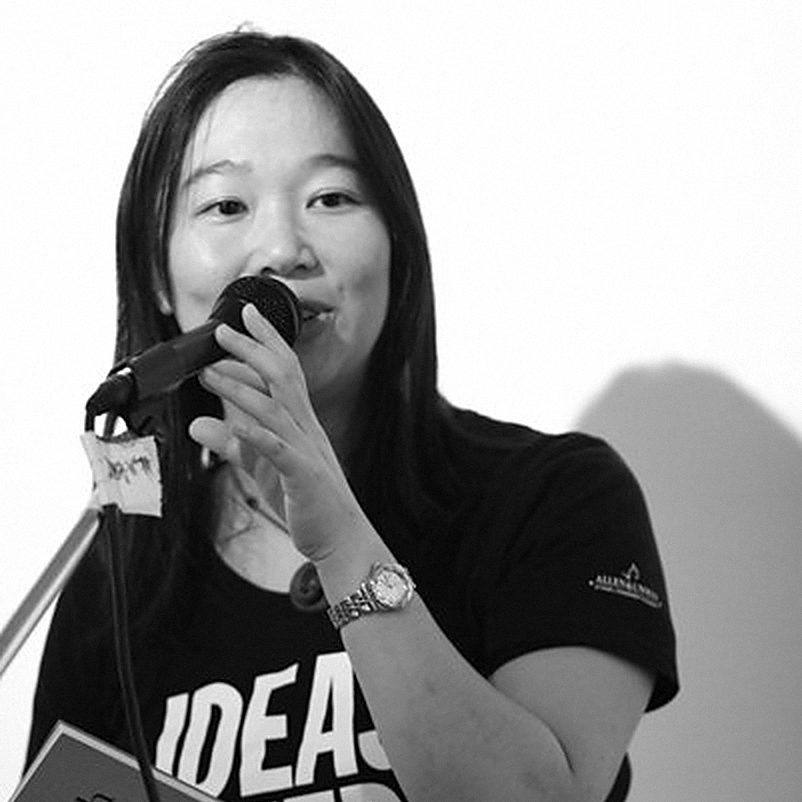
Dr Renee Liang is a paediatrician and writer based in Tāmaki Makaurau Auckland. She has been in paediatrics for 25 years (18 as a specialist). Renee is also a successful writer – having written plays, poetry, short stories and creative essays over the past two decades and is a Member of the New Zealand Order of Merit for services to the arts.
She describes some of the most radical changes she’s seen over the years as the rise of the New Zealand-Chinese diaspora as its own culture, with a thriving arts ecosystem and allyship with other indigenous and migrant artists.
What is your understanding of AI and what it does?
The words ‘artificial intelligence’ are misleading and inaccurate. It is complex machine algorithms that can take large amounts of data, process and output them in ways that a user can request. AI is man-made and despite the name, not really about intelligence – it’s just very impressive application of computing power.
How do you feel about this technology?
I’m very concerned about the environmental and human costs. It takes creative capital to feed mostly corporate, non-creative uses. In the process all outputs are averaged so any innovation is diluted.
Yes, some uses such as the generation of animation could be said to ‘democratise’ access to previously very expensive methods – and some of the results, such as the animated film ‘Flow’, are real success stories that would not have been made but for AI. Yet, most uses are incredibly mediocre and the costs not yet clear.
When the world is turning hotter and hotter every year, how do we explain to future humans that we burned their future to make gifs of cats?
Has AI impacted your industry and/or adjacent industries?
Yes, the creep of AI into everything from radiology diagnostics to AI scribes for medical notes is inevitable. We don’t have enough time or brain space as individual medical practitioners to really look at the evidence – it’s been sold to us as saving time, our services have just informed us it’s happening and to upskill. We rely on the skeletal IT workforce to do due diligence before rolling these things out. I suspect time will show some of these decisions have not been careful enough.
Do you use AI at work? In what capacity?
I have just downloaded an AI medical scribe! My new work at a private clinic does not come with typist time, so I have signed on for Heidi AI and have been reading guides about how to train it. Heidi AI is developed in Australia and is being rolled out across public healthcare after the GPs adopted it some years back. It’s had a mixed reception, but I don’t have much choice. It’s either this or spend hours slowly typing my own letters.
How do you find it has helped you? Or hindered?
So far (I’m one day in), it’s shown me that it takes dictation accurately. Tomorrow I’ll try its scribe function for the first time. [Update: I’m mostly sold! It does take a little time to train but not as much as I anticipated. From day one using it I was able to generate a letter that captured the conversation well, with good accuracy, clear formatting and not requiring much extra time to edit.
Any time I spend editing trains it, so over time it will sound more and more like the letters I normally write by dictating to a typist. It’s pretty cool (and previously unattainable best practice) to be able to email a letter to a GP within minutes/hours of seeing a patient.]
How do you feel about AI being integrated into the medical world? Where do you draw the boundaries?
I’ve listened to podcasts (such as this one) to say that the scribe use is well suited to AI to save labour and time, whereas more complex uses, for example diagnosis, is not at all suited and could lead to dangerous errors. We work in an increasingly complex world so some degree of machine automation, for example checking treatment protocols or flagging when there might be drug interactions, is useful. Arguably those last two examples have existed for decades before it was called ‘AI’. Though with what AI can do now there is potential for those functions to be increasingly finessed.
Is there anything about the way we use or implement AI now that concerns you?
I worry that it’s all happening too fast with no one thinking hard enough about the implications. But we are also too exhausted and fighting too many fires on too many fronts, most of them far worse than the threat of AI. The lure of increased efficiency and using technology to spread ourselves thinner a.k.a ‘do more with less’ is too much to resist.
Conversely, do you have any positive views of AI and the ways it can be used to help humanity?
It’s a technology, possibly one of the once-in-a-few-decades innovations that changes how we view work. There are certainly opportunities, we just need to think carefully about the costs.
What does it mean for you to be human?
Humans are messy, imperfect and able to make leaps of intuition as well as be iterative.
The messy mistakes are like mutations. Many times they lead to disaster, but sometimes they lead to a huge leap that seems as impossible as it is improbable.
If you had the ability to change one thing about the way AI is being used now in your industry, what would it be?
More money put into research and policy before it’s implemented. A coordinated rollout instead of the piecemeal approach now happening.
How do you see AI transforming your industry in the next 5 years?
It’s already being applied into almost everything in healthcare.
Describe your perfect day off or holiday.
What’s a holiday…? Everything I do I love and is my passion. No slave labour, cocktails or racist fellow guests. The food is new to my palate and shows off the local culture.
‘Chats with a human’ is an original series of content created for the Essentially Human website. I regularly interview someone from a different industry and ask them how AI has impacted their work.
All content is copyright © Karen Tay. Unauthorised reproduction, scraping, or use of this content, including by AI training systems, is prohibited without express written permission from Karen Tay.